

Introduction: The Oxbridge MBA Dilemma
For many aspiring business leaders, earning an MBA from either Oxford or Cambridge is a dream worth chasing. But here is the challenge that stops many applicants in their tracks: what happens if you are good enough for both?
Choosing between the Oxford MBA at Saïd Business School and the Cambridge MBA at Cambridge Judge Business School is not simply a matter of rankings or reputation, it is a decision that hinges on your career goals, your preferred learning environment, and the community you want to be part of.
This guide cuts straight to what matters, programme data, career outcomes, curriculum highlights, and costs, sourced directly from both schools’ official websites for the 2025–2026 application cycle.
Quick Verdict: Oxford vs. Cambridge at a Glance
Not everyone has time to read 3,000 words before their morning commute. Here is a rapid-fire summary to point you in the right direction:
Choose Oxford Saïd if…
- You are drawn to social impact, sustainability, and purpose-driven business, these are woven into Oxford’s core curriculum through the GOTO (Global Opportunities and Threats: Oxford) module.
- You want a highly internationally diverse cohort: the 2025–26 class represents 63 nationalities, with 96% of students from outside the UK.
- Your post-MBA path leads toward financial services or consulting in London.
- You value access to Oxford’s unique college system, world-class research libraries, and a centuries-old university community.
- You want a structured Entrepreneurship Project that places you inside real ventures during the programme.
Choose Cambridge Judge if…
- Technology, innovation, and venture capital are at the heart of your post-MBA ambitions. Cambridge’s Silicon Fen ecosystem is unparalleled in the UK.
- You want a smaller, tighter-knit cohort of around 217 students where you will know virtually everyone by name.
- You value the Global Consulting Project (GCP), a live, real-world consulting engagement for a global client at the end of Lent Term.
- You want the flexibility of Concentrations in Easter Term to deepen expertise in a specialist area before graduation.
- The slightly lower tuition of £80,000 versus Oxford’s £88,800 matters to your financial planning.
- Head-to-Head Comparison: Key Program Data (2026 Edition)
- Detailed Analysis: Culture and Teaching Style
- Curriculum and Unique Experiences
- The Careers Outcome: Geography and Industry
- The University Experience: Beyond the Business School
- Application Tips for 2026 Entry
- Essay Tips (Both Schools)
- Interview Tips
- Total Cost of Attendance: Financial Planning for 2026
- Verdict: How to Make Your Final Decision
- Explore More About European B-Schools
- FAQs : Oxford vs. Cambridge MBA
Head-to-Head Comparison: Key Program Data (2026 Edition)
| Programme Name | Oxford Saïd MBA | Cambridge Judge MBA |
|---|---|---|
| University | University of Oxford Saïd Business School | University of Cambridge Judge Business School |
| Duration | 12 months (full-time) Sept 2026 – Sept 2027 | 12 months (full-time) Mid-Sept 2026 – Mid-Sept 2027 |
| Cohort Size (current class) | Not publicly disclosed (63 nationalities; 48% female; 96% non-UK) | 217 students (43 nationalities; 47% female) |
| Tuition Fee (2026 entry) | £88,800 (Application fee: £75) | £80,000 (Application fee: £165) |
| Median / Mean GMAT | 680 (median, 2025-26 cohort) | 700 (mean average, current class) |
| Average Work Experience | 6 years | 6 years |
| Average Age | 29 (range: 24-39) | 29 |
| Teaching Style | Lectures, seminars, case studies, group work, experiential projects | Lectures, seminars, case studies, live client projects, small-group consulting |
| Key Differentiator | Global social impact, sustainability& entrepreneurship (GOTO module) | Tech & innovation hub (Silicon Fen),Global Consulting Project |
| Average Base Salary (latest report) | £74,143(2023-24 class) | £76,138 (avg package: £93,085)(2023-24 class) |
| Top Recruiters (latest report) | Financial Services, Technology, Consulting (McKinsey, BCG, Amazon, Apple) | Google, PwC, TikTok, Model ML,+ Finance / VC / PE firms |
| Official Programme Page | sbs.ox.ac.uk/programmes/mbas/oxford-mba | jbs.cam.ac.uk/masters-degrees/mba/ |
Learn Their Secrets: Discover the strategies candidates used to gain admission and scholarships to their dream B-school.
Detailed Analysis: Culture and Teaching Style
Oxford Saïd, The “World’s Problems” Approach
- Oxford Saïd’s institutional DNA is encoded with a conviction that business must serve society. The school’s own language frames the Oxford MBA as a programme for a “global community tackling the world’s problems”, and this is not just marketing copy. It is a philosophy embedded across the curriculum, from how core courses are framed to the kinds of electives on offer.
- The atmosphere at Oxford reflects its larger, more globally diverse cohort. With students drawn from over 63 nationalities in the 2025–26 class, and 96% arriving from outside the United Kingdom, classroom discussions carry a genuinely international texture. Debates on sustainability, capitalism, governance, and social entrepreneurship are not elective add-ons, they are built into core modules such as Business and Society and integrated throughout the programme via cross-cutting themes of sustainability and impact.
- The school’s teaching combines lectures, seminars, case study analysis, group work, and experiential modules. Oxford follows the University of Oxford’s term structure (Michaelmas, Hilary, and Trinity terms, plus a summer term), and attendance at all lectures is expected during the intensive twelve months.
- Key teaching characteristics: strong emphasis on systems thinking, global mindset development, impact-oriented entrepreneurship, and cross-disciplinary learning drawing from Oxford’s wider university.
Cambridge Judge, The Tech & Innovation Hub
- Cambridge Judge Business School has a fundamentally different energy, shaped by one of the world’s most extraordinary innovation ecosystems: Silicon Fen. Cambridge is home to over 5,000 technology companies and a thriving cluster of biotech, AI, and deep-tech ventures that have made it Europe’s answer to Silicon Valley. This is not incidental to the MBA, it is central to it.
- The Cambridge MBA cohort of around 217 students creates an intimacy that students consistently describe as one of the programme’s greatest strengths. With just over 200 classmates, relationships deepen quickly, team projects feel genuinely collaborative, and faculty are more accessible. The school’s own description of its three core pillars, collaborative learning, academically rigorous curriculum, and experiential learning through live client projects, captures this perfectly.
- Teaching on the Cambridge MBA is structured across four Cambridge University terms (Michaelmas, Lent, Easter, and Summer), blending core courses with real-world consulting projects and specialist Concentrations. Students engage with client organisations from the first term, and the programme is deliberately designed so that theory and practice are never more than a few weeks apart.
- Key teaching characteristics: highly applied, project-driven, collaborative in small teams, with a strong lean toward technology, entrepreneurship, and innovation as career pathways.
Oxford or Cambridge? Let’s Find Your Fit.
Not sure which Oxbridge MBA aligns with your career goals? We will provide a candid assessment to help you choose.
Curriculum and Unique Experiences
Oxford MBA
- 8 Core Courses: Accounting, Finance, Marketing, Strategy, Organisational Behaviour, Operations, Economics, and Business & Society.
- GOTO Module: Global Opportunities & Threats: Oxford, teams tackle live systemic challenges for global partner organisations using a systems-thinking approach.
- Entrepreneurship Project: A year-long integrative module working with real ventures; past projects span fintech, energy, and education across London, Oxford, Dubai, and Singapore.
- Summer Consulting Project: Teams of 2-4 undertake a 7-week live consulting engagement for a corporate sponsor or NGO globally.
- Electives: Across Hilary, Trinity, and Long Vacation terms, from AI & Analytics to Africa Business and Fintech.
Cambridge MBA
- Michaelmas Term: Core business competencies + Management Praxis series (negotiation, leadership, team dynamics).
- Global Consulting Project (GCP): End of Lent Term, small teams work as live consultants for global clients, including past engagements with WWF, UN, BlackRock, WHO, and the London Stock Exchange.
- Concentrations (Easter Term): Specialist thematic deep-dives, students choose a Concentration, complete team projects, and present findings in a simulated boardroom.
- Summer Term: Individual Project (consulting engagement globally) or internship; permanent employment cannot begin until mid-September.
Get the inside scoop on the Cambridge MBA: Read our exclusive interview with the Head of Admissions, Emily Brierley.
The Careers Outcome: Geography and Industry
Oxford Saïd: Employment Glimpse
According to the official Saïd Business School Employment Report for the class of 2023–24, Oxford MBA graduates secured positions in 48 cities globally. The class demonstrated remarkable career mobility, with 82% making a significant career shift (switching sector, country, or function), and over 9% launching their own ventures across sectors, including energy, education, aerospace, media, and fintech.
Sector breakdown for the 2023-24 class:
- Financial Services: 34.2% (largest sector, spanning investment banking, private equity, fintech, and asset management)
- Technology: 22.6%
- Global Industries: 19.2%
- Consulting: 18.5%
- Impact: 5.5% (social enterprise, public sector, and NGOs)
Average base salary (2023-24 class): £74,143
Notably, 25% of the class completed what Oxford terms a ‘triple jump’, switching sector, function, and geographic location simultaneously. The UK remained the top destination for employment.
Source:Oxford MBA Employment Report 2023–24, sbs.ox.ac.uk
Cambridge Judge: Employment Glimpse
Cambridge Judge’s 2025 MBA employment report, covering the class of 2023-24, shows a strong pivot toward technology as the dominant sector, a reflection of Cambridge’s unique Silicon Fen positioning.
Key headlines from the official employment report:
| Category | Metric | Value |
|---|---|---|
| Overall Placement | Job offers within 3 months of graduation | 79% |
| Overall Placement | Secured full-time positions (actively seeking, within 4 months) | 85% |
| Career Change | Switched at least one: country, function, or industry | 91% |
| Career Change | Switched employment sector | 75% |
| Career Change | Switched job function | 70% |
| Career Change | Switched country | 33% |
| Destinations | Post-MBA countries represented | 27 |
Sector breakdown (2023-24):
Finance emerged as the leading sector at 26%, with technology close behind at 23%. Venture capital and private equity were dominant sub-sectors within finance.
Average base salary:
£76,138, with an average total package of £93,085.
Top recruiters:
Google, PwC, TikTok, and Model ML, among others.
Source: Cambridge MBA Employment Report 2025, jbs.cam.ac.uk/masters-degrees/mba/careers/employment-report/
The University Experience: Beyond the Business School
Oxford: Dreaming Spires and the College System
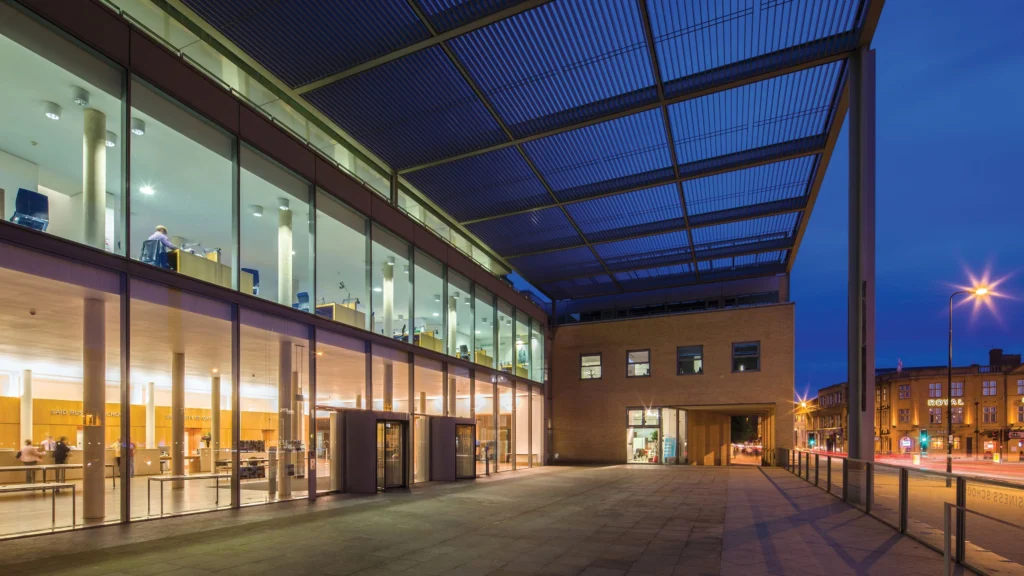
Oxford MBA students are assigned to an Oxford college, such as Green Templeton College or St. Cross College, and this membership is far more than ceremonial. College membership gives you access to a cross-disciplinary community of academics, students, researchers, and Nobel laureates from across the university. You can attend formal dinners (“formal halls”), use the Bodleian Library system, one of the world’s greatest research libraries, and participate in centuries-old university traditions.
The city of Oxford itself is unlike any other MBA destination. Known internationally as the “City of Dreaming Spires,” it is compact, walkable, and deeply intellectual. The social and cultural life of Oxford, its debates, lectures, student societies, and riverside evenings, permeates the MBA experience in ways that no brochure can fully capture.
Oxford’s location also offers excellent access to London (approximately one hour by train), which matters enormously for those pursuing careers in finance and consulting based in the capital.
Cambridge: Silicon Fen, Bikes, and the College System
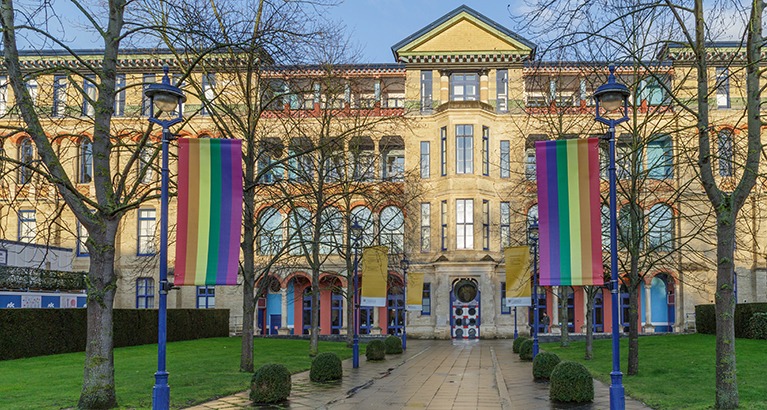
Cambridge offers its MBA students an equally distinctive collegiate experience. Depending on their application, students are affiliated with a Cambridge college such as Hughes Hall or St. Edmund’s College, gaining access to the unique social fabric of the Cambridge collegiate system, formal dinners, college gardens, river punting, and a cross-disciplinary academic community.
Cambridge itself is a beautiful, compact, and famously bicycle-friendly city. More importantly for MBA students, it is surrounded by one of the world’s most productive technology and innovation ecosystems. Silicon Fen, the cluster of over 5,000 technology and biotech companies stretching from Cambridge into the surrounding villages, means that guest speakers, networking events, and post-MBA career opportunities with world-leading innovators are woven into daily life.
The Accelerate Cambridge programme, based at Cambridge Judge, gives MBA students direct access to the school’s renowned startup accelerator, connecting them with entrepreneurs, mentors, investors, and venture builders within the Cambridge ecosystem.
Application Tips for 2026 Entry
Admissions Criteria: What Both Schools Are Looking For
Both Oxford Saïd and Cambridge Judge operate a staged admissions process with five rounds each, reviewing candidates on a rolling basis. Both schools strongly encourage early applications, both for competitive advantage and to maximise scholarship eligibility.
Common requirements at both schools:
- An undergraduate degree (ideally 2:1 or equivalent)
- A minimum of two years of full-time professional work experience (both schools cite 6 years average for their current classes)
- A valid GMAT or GRE score (no waivers at either school)
- Two professional or academic references
- Essays / personal statement
- Online assessment (Oxford uses Kira Talent platform)
- Interview if shortlisted
What the Admissions Committee Values
What the Admissions Committee Values
According to the official Oxford MBA application requirements page, the admissions committee looks for: evidence of career progression and international exposure; leadership potential; clear post-MBA career plans that demonstrate how the programme bridges a gap; good communication skills and analytical ability; and fit within the Oxford MBA community. Oxford is particularly drawn to candidates who demonstrate a global mindset, a track record of impact, and clarity about the change they want to make in the world. The median GMAT for the 2025–26 class is 680 (previous GMAT equivalent: 690 in the old version), and a GRE competitive score is 160 verbal / 160 quantitative.
Cambridge Judge’s website emphasises that the school’s 90%-non-British cohort is fundamental to creating its diverse, world-class learning environment. The school specifically looks for collaborative spirit, innovation potential, and candidates who will actively contribute to the three pillars of the Cambridge MBA: collaborative learning, academic rigour, and experiential engagement. The mean GMAT for the current class is 700. The school also offers specific scholarships for technology professionals, entrepreneurs, military veterans, LGBTQ+ candidates, and individuals from underrepresented regions, signalling what kind of diversity it is actively building.
Essay Tips (Both Schools)
- Be specific – name the modules, professors, and career paths you are targeting
- Show why this school, not just ‘an Oxbridge MBA.’
- Oxford: demonstrate leadership, impact, and global mindset
- Cambridge: show collaborative instinct and how you will contribute to the class
Explore :
Interview Tips
Oxford MBA Interview
If shortlisted, Oxford MBA interviews last approximately 30 minutes and are conducted by a faculty member, a senior member of the administrative staff, or an industry adviser. Interviews take place in Oxford (particularly during Stage 4, where an in-person interview day in Oxford is offered), at select global locations, or via Zoom. Both formats are treated equally in assessment. Candidates are advised to treat it as they would a senior job interview, prepared to expand on any part of their application.
Cambridge MBA Interview
Cambridge operates a virtual interview day as part of its process. The day includes an interactive event with Q&A panels featuring current students and alumni, designed both to assess candidates and to give them a genuine feel for the Cambridge community. The school makes clear that cultural fit and collaborative spirit are key dimensions of its assessment.
Explore :
Total Cost of Attendance: Financial Planning for 2026
Understanding the full financial picture, not just tuition, is essential for planning your MBA. Below is what the official school websites confirm for 2026 entry.
Oxford MBA, 2026–27 Costs
- Tuition fee: £88,800 (confirmed for the 2026–27 programme)
- Application fee: £75
- Deposit to secure place: £9,800 (applied against tuition)
- Living expenses: Not specified on the official programme page; budget approximately £15,000–£20,000+ for the year
- International electives carry additional travel and accommodation costs
Source: Oxford MBA FAQs, sbs.ox.ac.uk/programmes/mbas/mba/faqs
Cambridge MBA, 2026–27 Costs
- Tuition fee: £80,000 (confirmed for September 2026 entry)
- Application fee: £165
- Reservation fee: £7,950 (non-refundable; applied toward tuition)
- Estimated living costs: £19,860 for 2026–27 (confirmed on fees page)
- Estimated total first-year cost including living expenses: approximately £99,860+
Source: Cambridge MBA Fees & Funding, jbs.cam.ac.uk/masters-degrees/mba/fees-funding/
Both schools offer scholarship programmes. Oxford notes that applying by the Stage 4 (January) deadline maximises scholarship eligibility. Cambridge awards scholarships on a rolling basis and strongly encourages early applications for those relying on financial aid. Both programmes also offer access to external loan options for candidates who have received a conditional offer.
Verdict: How to Make Your Final Decision
There is no objectively superior choice between the Oxford MBA and the Cambridge MBA. Both programmes are world-class, both carry credentials that will follow you for a lifetime, and both will challenge, stretch, and transform you in ways you cannot yet anticipate.
The right answer is the one that fits who you are, where you want to go, and the kind of learning environment in which you do your best work.
- Step 1: Be honest about your career goals.
If technology, venture capital, deep-tech, or the startup ecosystem excites you most, Cambridge is where you want to be. If your ambitions run toward consulting, financial services, social enterprise, or a portfolio career combining impact and global business, Oxford’s ecosystem and alumni network will serve you better. - Step 2: Attend an event or campus visit.
Both schools hold regular information sessions, open days, campus visits, and virtual events throughout the year. There is no substitute for spending a morning at each school, sitting in on a sample class if possible, and speaking to current students. Gut feeling after a campus visit is one of the most reliable data points you have. - Step 3: Speak to alumni in your target industry.
Both schools facilitate introductions to alumni as part of their admissions process. Before making your final decision, speak to graduates now working in the role, sector, or country you are targeting. Their honest experience of the programme’s career pipeline will be more valuable than any data point in this guide. - Step 4: Apply early to both if you are genuinely torn.
Both programmes offer five application rounds, and there is no rule against applying to both. If you are accepted to both schools, you will face this decision with much better information, including scholarship offers, financial aid packages, and the results of your campus visits.
The Summary:
There is no wrong answer between Oxford and Cambridge. There is only one answer: the school that matches your ambitions, fits your learning style, and ignites your excitement every time you think about walking through its doors. That is the school for you.
Explore More About European B-Schools
Top MBA Programs in Europe 2025: Rankings, Costs & How to Choose
Compare top programs, salaries & durations.
FAQs : Oxford vs. Cambridge MBA
Is an Oxford MBA better than a Cambridge MBA?
Neither is categorically better. Oxford is stronger for consulting, finance, and social impact. Cambridge leads in tech, VC, and innovation. Culture fit and career alignment matter more than any ranking.
Is it harder to get into Oxford or Cambridge for an MBA?
Both are highly selective. Oxford’s median GMAT is 680; Cambridge’s mean is 700. Both assess well beyond scores, career trajectory, essays, and interview performance are all critical.
What GMAT score do I need?
Oxford: no minimum published; 595+ (GMAT Focus) is competitive, median 680. Cambridge: no minimum; class mean is 700. Both accept the GRE.
How much does the Oxford MBA cost in total?
Tuition £88,800 + ~£15,000–20,000 living costs = approximately £103,000–£110,000+ for the year.
Source: https://www.sbs.ox.ac.uk/programmes/mbas/mba/faqs
How much does the Cambridge MBA cost in total?
Tuition £80,000 + £19,860 confirmed living costs = approximately £99,860+.
Source: jbs.cam.ac.uk/masters-degrees/mba/fees-funding/
Can I work in the US after an Oxford or Cambridge MBA?
Both programmes have alumni in the US. Working there requires appropriate visa authorisation; an Oxbridge MBA does not confer automatic US work rights. Research employer-sponsored visas alongside each school’s US careers support.
Do both schools offer scholarships?
Yes. Oxford: apply by Stage 4 (January) deadline for the best eligibility. Cambridge: rolling scholarships for women (Forté), LGBTQ+ (ROMBA), military veterans, tech professionals, and entrepreneurs. Apply early at both.
Are you targeting a top UK MBA in 2026?
Turn your MBA dreams into an acceptance letter. Book your free profile evaluation session with us today.