

[Intro by Arvind Kumar]
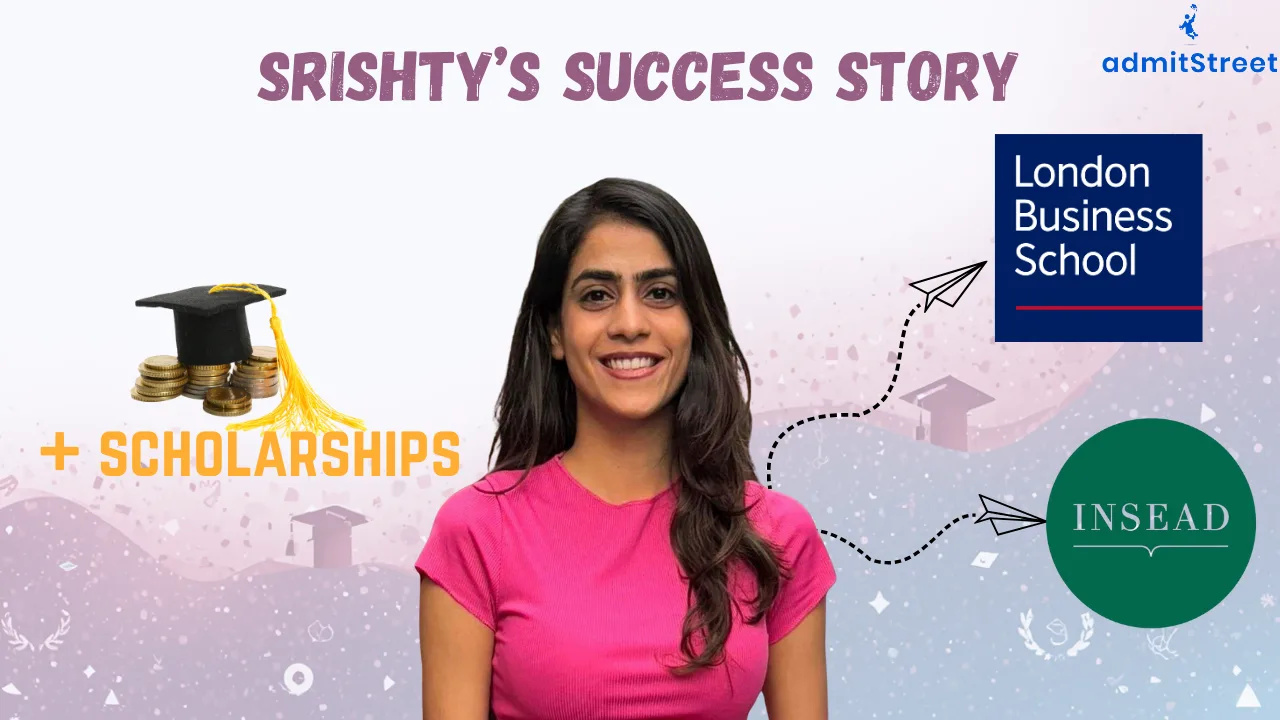
Thrilled to share Srishty’s success in securing MBA admits from INSEAD and LBS MBA programs, along with a EUR 20K scholarship from INSEAD.
Srishty grew up in a small town in Haryana, where her family defied social norms to ensure she received an education. As a Naval Officer’s daughter, she moved 35 times and attended 6 schools, learning early on how to adapt, belong, and support herself financially from the age of 17.
She turned this resilience into a series of firsts, becoming the first woman in her family to earn an income, hold a passport, and work at a global firm like Bain.
Beyond her professional role, Srishty is a fierce advocate for animal welfare, having co-founded a rescue foundation and fought legal battles for strays. She brings that same passion to the basketball court, where she thrives in high-pressure team settings and values shared victories.
Wanting to expand her business acumen, gain international exposure, and evolve into a high-impact global leader, she had her eyes set on the world’s best programs including INSEAD and LBS.
Our working sessions often felt like deep introspection: mapping out her life from a 12th-grade national basketball captaincy to resolving high-stakes challenges at KPMG and Bain.
Through rigorous brainstorming and multiple iterations, we tailored her CV and essays to reflect her true voice, ensuring her story resonated with the unique ethos of each school.
Congratulations, Srishty, on this well-deserved success!
This success story interview delves into Srishty’s background, her motivation for an MBA, application process, and how admitStreet helped her achieve the dream INSEAD MBA admit.
Personal & Professional Background
Arvind (admitStreet): Let’s start with your background. You were born into a Navy family. What was your childhood and upbringing like?
Srishty: My father is in the Indian Navy, so while I was born in Haryana, I grew up in multiple cities across India. I had the wonderful opportunity to interact with people from many different backgrounds, which made me realize that I have probably learned more from people than I have from textual knowledge.
Moving through seven different cities, I’ve lived in over 35 different houses. Anyone from a defense background can probably relate to the fact that every year we had to change schools, friends, and homes. Nothing was constant; you had to be adaptable, there was no other choice. However, I believe that became one of my key strengths.
Regarding my professional path, I started with a B.Com (Hons) degree from Gargi College, Delhi University. After that, I transitioned to KPMG India. I began as a Client Due Diligence Analyst in the Forensics team, where I primarily worked on due diligence reports for clients and stakeholders, essentially for M&A activity or when they needed to hire senior stakeholders.
About a year and a half later, I transitioned to Bain & Company in the Product Practice and Knowledge team. I started as an Associate working on client classification and revenue, and I was eventually promoted to Specialist, which is my current role. Arvind:
Arvind (admitStreet): Can you talk about your current role at Bain Capability Network (BCN)?
Srishty: As an Associate and then as a Specialist, I was essentially responsible for classifying the revenue that we received from clients and understanding which team supported our clients the most to allocate that revenue to them. However, it often happens that multiple teams, in fact, help our clients achieve their goals.
Consequently, there were a lot of disputes to analyze regarding which team should get what percentage of the revenue. Most of my communications were with senior stakeholders because revenue is a really important component of almost everything including the hiring process, partner compensation, and even BCN employee compensation. Most of my work revolved around solving these disputes, interacting with senior stakeholders, and generating insights from the data we received.
Arvind (admitStreet): You’ve had the opportunity to work with global teams.
Srishty: Yes. Until 2024, I had never traveled internationally, but I felt I knew what it would be like because I had the opportunity to interact with so many stakeholders placed in different parts of the world. My immediate manager was in Boston, and the CFOs and Executive Vice Presidents of specific departments within Bain were dispersed in various countries.
I’ve had regular, ongoing communication with them. While most of my stakeholders were placed in different regions, the most direct relationships I had were within the EMEA region. That was when I began to understand the kind of lifestyle they lead, how they talk about their work, and their approach to work-life balance. Everything I experienced through those interactions made me realize that I would like to lead a similar international life.
Arvind (admitStreet): Let’s talk about your extracurriculars. There are two things that I think are unique to you: basketball and animal volunteering/sheltering.
Srishty: I think these were the two most important aspects I felt I had to highlight in my MBA applications. Unlike other consultants I had spoken with, you made sure these truly came out in my essays.
I am a national basketball player, and the sport made me realize that being part of a team makes me more productive, happier, and helps me lead a successful life in every way. Again, learning from people is incredibly important to me.
As for animals, my very first memories are of me just relaxing around them. They have been a vital part of my life, and throughout my early 20s, my days have mostly revolved around work and then animals. I’ve learned so much through this. There have been emotional days, but also very successful days when I’ve been able to get a dog or cat adopted, or successfully rescue and foster them.
Motivation for an MBA

Arvind (admitStreet): When did the thought of an MBA first come to mind, and why did you want to pursue one?
Srishty: Like many Indian families, my parents were quite pushy about me pursuing an MBA right after graduation. However, I felt I needed to first understand the type of work that happens in different domains before committing to it.
The turning point came in 2022 when I joined Bain. I had the chance to attend a meeting with someone who was just about to leave for their INSEAD MBA. Up until then, I hadn’t even considered an international MBA. My first thought was that it would be too expensive and that only the ‘crème de la crème’ of our generation would get such a prestigious opportunity.
I initially started with both the CAT and GMAT journeys, but I quickly realized the style of those exams didn’t align with my strengths. That’s when I shifted to the GRE and began exploring other options. I remember INSEAD was the only top school I initially brought to you, saying, ‘This is the one I know I want to apply for.’
When you first asked me ‘Why an MBA?’, my answers were very scattered. But as I reflected, the primary reason became clear: people. Having grown up in so many different cities, I realized that I learn best through human interaction. Expanding that exposure to a global level will be essential for developing my soft skills.
Secondly, while I was already in the consulting world, my role was more operations-focused. I was supporting client teams and managing internal revenue at Bain, but I didn’t yet have the full ‘consulting toolkit’ required to transition into front-end consulting.
Ultimately, it was a combination of these factors: an MBA will help me refine my soft skills, provide the global networking I crave, and give me the strategic toolkit needed for high-impact consulting.
Planning your MBA journey?
With 1:1 mentorship and strategic support, we’ve helped candidates turn uncertainty into admits and scholarships. Ready to begin?
Why INSEAD
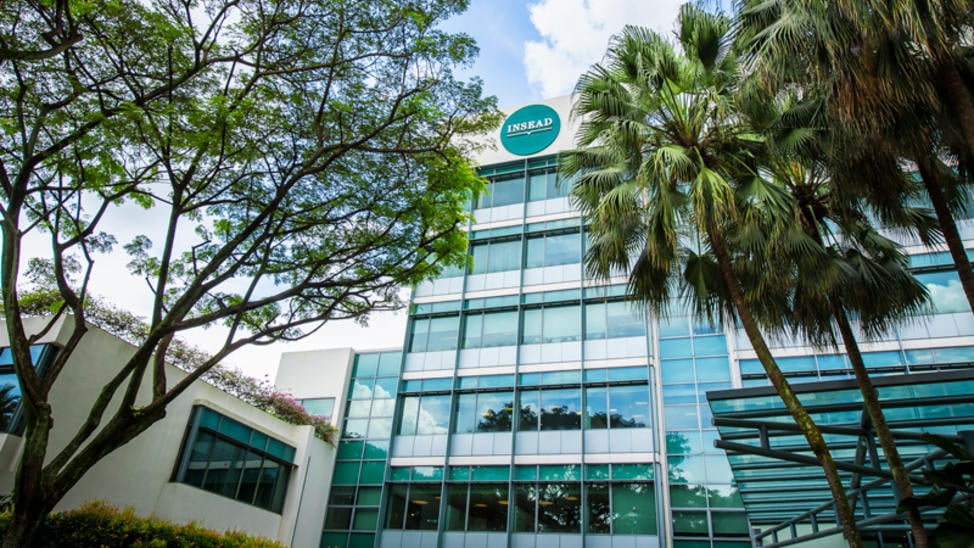
Arvind (admitStreet): Why INSEAD specifically? I recall you visited the INSEAD Singapore campus as well – any insights you gained during that visit?
Srishty: Coming from a family where no one had traveled abroad or even considered an international education, my knowledge of global schools and how they differed from the Indian education system was quite limited. Initially, INSEAD, LBS, and Harvard were the only three on my radar.
As I began my research, I realized that INSEAD doesn’t just focus on academics. It values your overall personality. It’s a school that looks at your extracurriculars and your life story, not to dramatize hardships, but to see how you’ve learned and grown from them. I wanted to be at a school that would value my journey and understand the person I’ve become over the last 25 years. Additionally, as a 10-month program, it allowed me to return to the workforce sooner.
The INSEAD Singapore campus visit was perhaps the most vital part of my research. While I had listened to podcasts and read countless articles, visiting the campus in person helped me understand the caliber of people I would be studying with. I had the chance to speak with the Admissions Committee, who shared insights you simply can’t find online.
They didn’t just show us the ‘glorified’ version of the experience, like the beautiful buildings; they were honest about how intense the program is. They shared small, meaningful pieces of advice. For instance, someone mentioned that the Dean often asks students to wear their watch on the opposite hand every other week, just so they never get too comfortable with the status quo.
Finally, learning about the ‘Freddy’s bell’ and the culture of peer support resonated with me deeply. While we will naturally be competing in various domains, I want to be around people who will genuinely support me in achieving my goals rather than just competing against me.
Learn more about the INSEAD MBA program, its curriculum, admissions, and career outcomes in our comprehensive guide here.
Profile: Strengths & Challenges
Arvind (admitStreet): Once your GRE score was in place, what did you identify as your core strengths for the MBA application process? On the flip side, what were some roadblocks or challenges?
Srishty: In terms of strengths, I felt I had a diversified profile. Growing up in different parts of the country gave me a unique perspective on how to interact with diverse groups of people. Professionally, having global stakeholders supporting me and helping me improve every day at work was a significant advantage.
My extracurriculars were also a major strength. Basketball highlighted my teamwork and how well I function within a group, while animal sheltering and rescue work showcased my emotional intelligence and empathy. Because the essays were so intensive, they provided the space to explain not just what I’ve done, but why I did it and what I reflected on afterward. Interestingly, during my interviews, most of the questions focused on these two aspects rather than my professional journey.
That said, adapting the applications to different schools was a challenge. Even though the core content was similar, the phrasing for INSEAD was very different from LBS, as the essay prompts are quite different. When I read my essays now, each of them brings out a different version of me, the specific version each school looks for in a candidate.
In terms of roadblocks, there were quite a few. First, working at a consulting firm meant my timelines were incredibly tight. Since we started the applications in July, I had very little time to draft everything. On top of that, I struggled with my health over the last year. Just before my interviews, I was actually hospitalized for a week. I remember being so tense, texting you and worrying: ‘What if they won’t postpone? What if I can’t speak during the interview?’
Finally, my GPA wasn’t as high as I’d have hoped it to be, and I had to navigate my struggle with math. I knew quantitative aptitude wasn’t my primary strength, which is why I pivoted from the CAT to the GMAT and finally to the GRE. I had to find a way to showcase my specific strengths rather than trying to fit into a traditional mathematical mold.
Working Process & Mentorship at admitStreet
Arvind (admitStreet): What exactly were you looking for in a consultant or mentor when we started working together?
Srishty: As soon as I finished my GRE, I spoke with a few different consultants. Every other consultant I talked to referred to my interests simply as ‘extracurriculars.’ They essentially said, ‘Okay, you’ve done this, that’s great, but what about the work experience? That’s what is most important to schools.
With you (admitStreet), the equation was different. You acknowledged the work I had done outside of my professional journey. I was very clear that I wanted to attend a school that would consider me as a whole person, valuing both my interests and my professional path. From day one, you didn’t treat my activities as just ‘extracurriculars’ on paper. You understood the ‘why’ behind my actions and how they shaped me.
I remember many of our sessions felt almost like therapy. I would tell you about the difficult experiences I had with the animals I cared for, how they affected me emotionally, and the negative parts of those experiences. You never downplayed my emotional quotient. That was exactly what I was looking for.
The second thing was the need to have everything documented. I’m someone who needs to jot everything down, which is why my initial email to you was extensive. I wanted you to know the real me before we started this journey, and I wanted to see how you would process all that information. Those two things really set you apart from other consultants.
You also didn’t force me to apply to a long list of colleges. I was upfront about the fact that I only wanted to aim for the best schools. Coming from a Navy background, I value having everything written down and disciplined. You kept me in charge and held me accountable for every single action we planned to take.
Arvind (admitStreet): Let’s talk about the CV and essays, our working process, iterations, etc.
Srishty: I want to add another point because a lot of my friends were also applying to the same colleges, and their consultants would give them pointers on what would ‘look good’ for that particular school. For me, that was a red flag because it felt inauthentic. No matter what, even if some of my stories were very simple, you never forced me to fake anything or write something dishonest. That authenticity, combined with understanding my story and bringing out the best version of it, is what you did. I think that is one of the major reasons I was able to secure interviews from all the B-schools I applied to.
In terms of the CV, when I first brought it to you, it was all over the place. It only listed the things I had done. It didn’t have the numbers, it didn’t explain why I did what I did, or what those actions led to. I soon realized that an MBA CV is quite different from a regular CV you send to hiring managers.
We went through many iterations, I think seven or eight versions. After every version I sent you, I was confident that it was the best I could make, but it would come back with so many comments. Those comments were intense but incredibly helpful because they forced me to see it from another person’s view. I understood that while I might have written a number, I needed to explain why it was actually important. You made me realize how to think from the perspective of the Admissions Committee and what they are looking for. I was very happy with the final CV we produced; it has even helped me improve my profile for future transitions beyond Bain.
Regarding the essays, we had on average 7-8 iterations for LBS and INSEAD. None of the content was copied and pasted, and it wasn’t ‘polished’ in a way that felt recycled. It was always about understanding what the school requires and the specific kind of storytelling and narration they want to see. Every essay brought out a different strength of mine.
For example, in one INSEAD essay about a stressful situation, I remembered a very critical event and wrote it down chronologically. You made me realize that this might come off as me not being great at handling stress or people, and you asked me to introspect on other situations. However, I felt that was my best story. Instead of making me change it to something ‘easier’ that wouldn’t risk a wrong impression, you helped me reframe it to highlight the challenges I faced and how I overcame them. That specific essay took a lot of time, but you let me stay authentic. We worked on the reflections and the insights from that situation, and I was really happy with the result.
I’ve been rereading all my essays even after submission, because seeing them live on paper makes me feel like, ‘Okay, I’ve actually done this.’ The initial StreetMap questionnaire you sent was so long and intensive, and I wrote down every good and bad thing that had happened in my life. The difference between that version and what we actually sent to schools was drastic, especially in the tone of narration. It wasn’t about victimizing myself over bad things or acting like I’m great because of one fantastic thing. It was about presenting a holistic experience of who I am.
Interview Experience:

Arvind (admitStreet): Let’s talk about the KIRA/ Video essays and your interview experience at INSEAD.
Srishty: While I find it easy to talk to a person, speaking to a computer (for KIRA/ Video essays) feels scary. Recording myself or taking pictures isn’t something I’m comfortable with, and having only one minute to think and 30 seconds to speak was intense. We practiced a lot, and the list of questions you gave me helped me understand what to expect.
In terms of the personal interviews, the first one was with an INSEAD alum. Her video was off because she was traveling, and the tone was very direct, almost like a checklist of things she wanted to know. It was conversational in its own way, as she really tried to understand my background.
However, after the second interview, I was terrified. I remember sending you a long message because it didn’t feel conversational at all. I was scared because, in both interviews, they didn’t seem interested in my professional journey. Instead, they asked abstract questions about my personal life that I never expected in an MBA interview.
They asked about my flaws as a person and how I behave in stressful situations, specifically demanding personal examples rather than professional ones. It felt like a ‘stress-test’ interview; they seemed to be trying to get under my skin to see how I’d react. Fortunately, you had trained me well to stay calm and focus on answering the question, regardless of what they threw at me. You taught me that even if the answer isn’t ‘perfect,’ I should just provide the best response I can.
They touched on very sensitive topics, like my journey with animals and the tough question: ‘Why pursue an MBA in 2025 when the market is so haywire?’ The ‘whys’ were much more important than the specific talking points I had prepared. Unscripted speaking became essential because I hadn’t specifically prepared for questions like, ‘What does faith mean to you?’ or ‘What do animals truly mean to you?’ I hadn’t rehearsed those answers, but because we had spent the past few months having deep conversations and you had pushed me to introspect on those specific points, it actually became easy for me to talk to them authentically.
Get ready to make a great impression.
These MBA interview guides can help you prepare effectively – read the articles.
Tips for Future Applicants
Arvind (admitStreet): To wrap this up, Srishty, what is your advice for candidates applying to INSEAD and LBS?
Srishty: First, you must know yourself and your journey deeply. Having everything written down really helped me understand my ‘whys.’ It is vital to identify the themes you want to bring out. Not every story in your life is great, and you won’t talk about everything, but focusing on those core strengths allows you to portray your truest version.
Second, prioritize authenticity. I know people who were given specific prompts by consultants on how to answer questions about ‘stressful situations.’ They were told, ‘This is a great situation to talk about, use this,’ but often the interviewer can tell it isn’t personal. My interviewers were very engaged because everything I said was honest. It wasn’t something anyone else could copy-paste; it was true to who I am.
Third, bring out both sides of your personality. While you should definitely focus on your professional journey, don’t neglect your personal interests. In both of my interviews, they didn’t ask me much about the specifics of my work; instead, they asked abstract questions like, ‘What do spirituality and faith mean to you?’ You can’t over-prepare for those; you just have to be honest.
Finally, I’d add that finding the right mentor or consultant is crucial. Every time you sent back comments on my essays, they didn’t just help the writing, they forced me to think about myself in ways I hadn’t before. It made me feel much more confident at every step, from the applications to the scholarship essays. Finding someone who is responsive and holds you accountable without you having to follow up is extremely important for your mental peace.
Arvind (admitStreet): It was a pleasure working with you, Srishty. All the best for INSEAD, have a great time ahead!
Planning your MBA journey?
With 1:1 mentorship and strategic support, we’ve helped candidates turn uncertainty into admits and scholarships. Ready to begin?