


The ISB PGP is a 1-year, full-time residential MBA-equivalent programme at the Indian School of Business, run across its Hyderabad and Mohali campuses. For the 2027-28 intake (Class of 2028), total fees are ₹40,46,520 (shared accommodation) or ₹44,45,000 (studio), minimum eligibility is 24 months of work experience with a valid GMAT/GRE score, and Round 1 applications close 20 September 2026. The Class of 2026 batch saw an average salary of ₹37.29 lakhs across 1,117 offers.
The Indian School of Business Post Graduate Programme (ISB PGP) stands as a transformative accelerated MBA alternative for experienced professionals in India and globally. With its unique 12-month intensive format, dual campuses in Hyderabad and Mohali, and prestigious international accreditations (AACSB, EQUIS, AMBA), ISB PGP is engineered for high career momentum.
Below is an in-depth guide to the ISB PGP, covering key aspects such as accreditation, rankings, campus details, admissions process, fees, placements, and much more.
Program Overview & Distinct Identity
What is the ISB PGP?
The Post Graduate Programme in Management (PGP) at the Indian School of Business is not a conventional MBA. It is a rigorous, one-year residential program designed specifically for professionals with substantial work experience. It condenses the core curriculum of a two-year MBA while leveraging the maturity and experience of its cohort to accelerate learning. The program’s philosophy centers on applied learning and leadership development, preparing students for senior management and leadership roles immediately upon graduation.
Key Differentiators: ISB PGP vs. Traditional Two-Year MBA
Prospective students often weigh ISB against traditional Indian and global MBAs. The decision hinges on career stage, learning style, and opportunity cost.
| Parameter | ISB PGP (1-Year) | Traditional Indian MBA (2-Year) | Global MBAs (1-Year, e.g., INSEAD) |
|---|---|---|---|
| Target Cohort | Experienced professionals (Avg. 5-6 years) | Freshers to early-career (0-3 years) | Mid-career professionals (Avg. 6-7 years) |
| Opportunity Cost | Lower (1 year off work) | Higher (2 years off work) | High (1 year off work + higher fees) |
| Curriculum Pace | Very intense, fast-paced | Moderate, with summer internship | Intense, global immersion |
| Networking Depth | Strong Indian corporate network | Strong peer bonds, extensive campus life | Powerful global, diverse network |
| Career Outcomes | Leadership/advancement in current field or switch within India | Entry-level management, career launchpad | Global careers, international mobility |
| Primary ROI | Quick career acceleration in India/ South Asia | Long-term brand value, foundational learning | Global exposure and brand |
ISB Accreditation & Global Recognition
ISB Accreditation
ISB holds prestigious global accreditations:
- AACSB (Association to Advance Collegiate Schools of Business)
- EQUIS (EFMD Quality Improvement System) These accreditations highlight ISB’s commitment to academic excellence and global standards in management education.
- AMBA (Association of MBAs) This re-accreditation is a testament to ISB’s relentless pursuit of excellence, world-class pedagogy, rigorous research, and outstanding faculty who mentor some of the brightest students.
ISB Rankings
ISB consistently ranks among the top business schools globally. It has been featured in various top rankings:
- Financial Times Global MBA Ranking 2026: ISB is ranked 1st in India and 12th globally. This ranking reflects the school’s commitment to excellence in management education and its growing reputation on the international stage.
- LinkedIn Top MBA Programs 2026: The Indian School of Business (ISB) has secured 5th position in the LinkedIn Top MBA Programs 2026. The LinkedIn Top MBA Programs 2026 ranking, built exclusively on LinkedIn data, evaluates the career outcomes of MBA alumni from business schools worldwide.
Contact Details of ISB
- Hyderabad Campus:
- Indian School of Business, Gachibowli, Hyderabad – 500111
- Phone: +91 40 2300 7000
- Mohali Campus:
- Knowledge City, Sector 81, SAS Nagar, Mohali – 140306
- Phone: +91 172 459 0000
Dean of ISB
The current Dean of the Indian School of Business (ISB) is Madan Pillutla. He assumed the role on July 1, 2021, succeeding Rajendra Srivastava. Madan Pillutla is an accomplished academic specializing in organizational behavior, with a significant background in teaching and leadership roles at various institutions, including the London Business School.
ISB Campus
ISB operates from two state-of-the-art campuses:
Hyderabad Campus
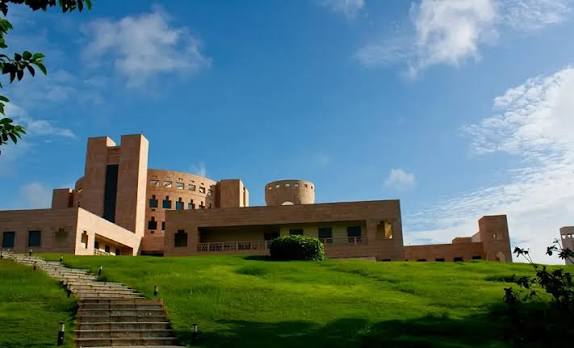
- Establishment: The Hyderabad campus was inaugurated in 2001 and is the older of the two campuses. It was designed by architect Vikram Lall and spans across 260 acres.
- Facilities: The campus includes modern academic facilities including a learning resource center, and a 400-seat auditorium, a recreation center, and four student villages that can accommodate between 130 and 210 students each. It is also certified by the Indian Green Building Council, highlighting its commitment to sustainability.
- Programs Offered: The Hyderabad campus offers various programs, including the flagship Post Graduate Programme (PGP), Management Programme for Working Professionals (PGPpro), Post Graduate Programme in Management for Young Leaders (PGPYL) and several executive education courses. It is also home to multiple research centers focusing on areas such as healthcare management, public policy, and family enterprise.
Mohali Campus
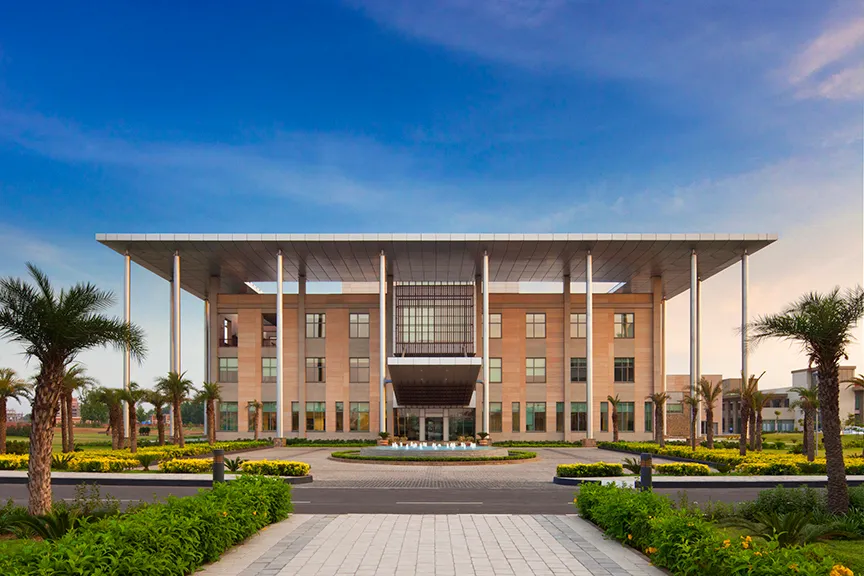
- Establishment: The Mohali campus began operations in April 2012. Designed by Perkins Eastman Architects under the leadership of Aaron Schwarz, it features a contemporary architectural style.
- Facilities: The 70-acre self-sustainable Mohali campus is fully Wi-Fi enabled and includes an academic block with lecture theaters, faculty offices, a learning resource center, and an atrium that serves as a 500-seat auditorium.
- Programs Offered: Similar to the Hyderabad campus, the Mohali location offers the PGP and various short-term executive education programs. It aims to provide high-quality management education with a focus on practical learning.
| Feature | Hyderabad Campus | Mohali Campus |
|---|---|---|
| Established | 2001 | 2012 |
| Area | 260 acres | Modern design |
| Facilities | Academic center, recreation center, student villages | Lecture theaters, faculty offices, learning resource center |
| Programs Offered | PGP, PGPYL, PGPpro, executive education | PGP, executive education |
Both campuses offer modern learning environments with advanced technology, libraries, and student support services, fostering innovation and collaboration.
Curious how applicants have successfully navigated their ISB journey? Let’s Read
Partnerships
The Indian School of Business (ISB) has established partnerships with a variety of esteemed institutions globally, enhancing its academic offerings and providing students with diverse learning opportunities.
Here are some key partnerships:
Associate Schools
- Kellogg School of Management (Northwestern University, USA)
- Wharton School (University of Pennsylvania, USA)
- London Business School (UK)
- Fletcher School of Law and Diplomacy (Tufts University, USA
Global Reach
ISB has established partnerships with over 50 institutions across various countries, including:
- United States
- France
- Germany
- South Africa
- Israel
- China
- Singapore
- Canada
- Australia
- Spain
- Switzerland
- Netherlands
- Sweden
These collaborations facilitate student exchange programs, joint research initiatives, and shared learning experiences, enriching the educational environment at ISB.
Purpose of Partnerships
The primary objectives of these partnerships include:
- Enhancing the curriculum through diverse pedagogical approaches.
- Providing students with global exposure to emerging business trends.
- Facilitating immersion programs that allow students to experience different business environments.
ISB Fees
The ISB PGP Program for 2027-28 has a comprehensive fee structure. The total fees for students opting for shared accommodation are INR 40,46,520, while those choosing studio accommodation will pay INR 44,45,000. These fees include the admission fee, commitment fee, tuition, accommodation, GST, and other mandatory expenses such as security deposits and alumni membership.
Additional estimated expenses, including books, laptops, and meals, amount to approximately INR 2,25,000. Insurance premiums are charged at actuals.
This fee structure provides students with the flexibility of choosing accommodation based on their preference.
| Particulars | Shared Accommodation (INR) | Studio Accommodation (INR) |
|---|---|---|
| Admission Fee | 3,38,559 | 3,38,559 |
| GST @ 18% (on Admission Fee) | 60,941 | 60,941 |
| Total Admission Fee (A) | 3,99,500 | 3,99,500 |
| Commitment Fee | 2,11,441 | 2,11,441 |
| GST @ 18% (on Commitment Fee) | 38,059 | 38,059 |
| Total Commitment Fee (A1) | 2,49,500 | 2,49,500 |
| Tuition Fee | 26,64,000 | 26,64,000 |
| Accommodation Fee | 2,34,000 | 5,36,000 |
| Total Fee (Tuition + Accommodation) | 28,98,000 | 32,00,000 |
| GST @ 18% (on Tuition and Accommodation) | 4,79,520 | 5,76,000 |
| Security Deposit | 20,000 | 20,000 |
| Total Payable (Incl. GST) (B) | 33,97,520 | 37,96,000 |
| Grand Total (A+A1+B) | 40,46,520 | 44,45,000 |
| Insurance Premium (At Actuals) | At Actuals | At Actuals |
| Other Expenses (Books, Laptop, etc.) | 2,25,000 | 2,25,000 |
Source: ISB PGP Fee Structure
Total ISB Fees
- Shared Accommodation (INR): 40,46,520 + 2,25,000 = 42,71,520
- Studio Accommodation (INR): 44,45,000 + 2,25,000 = 46,70,000
Roughly 25% of PGP students receive some form of financial support each year. For a full breakdown of merit, need-based, and diversity scholarships, see our ISB Scholarships guide.
ISB Placements 2026
The ISB PGP Class of 2026 achieved outstanding placement results, reinforcing ISB’s status as a top-tier business school.
Campus placement outcomes were strong, marked by 1,117 total employment offers extended across participating organizations. The batch demonstrated a strong capability to secure significant roles across a wide array of sectors, highlighted by 30 international placements and the participation of more than 25 new recruiting partners, a clear reflection of ISB’s growing international footprint. Career mobility remained a defining highlight of the program, as 67% of students successfully transitioned to a different industry and 69% pivoted to a new functional role.
The average salary package for the 2026 PGP batch was ₹37.29 lakhs, reflecting an increase of approximately 11% from the last cohort, with key sectors like Consulting, Technology, and BFSI leading in recruitment.
Explore this article on ISB Placements for a detailed analysis of industry trends, salary figures, top recruiters, and a full overview of ISB’s placements.
ISB Admissions Guide
Eligibility & Application Deadlines for 2026 Intake
- Work Experience: Minimum 24 months of full-time experience by the program start date. The average is 5-6 years.
- Academic Credentials: Bachelor’s degree or equivalent in any discipline. Strong academic record preferred.
- Standardized Tests: Valid GMAT or GRE score.
Be advised that to apply in the 2027–2028 cycle, GRE or GMAT scores must be dated between these dates:
- Round 1: September 21, 2021 – September 20, 2026
- Round 2: December 7, 2021 – December 6, 2026
- Round 3: January 18, 2022 – January 17, 2027
**Please note that the ISB code for the GMAT is N2D-J5-01 and the ISB code for the GRE is 7010 or 7892
ISB follows a rolling admissions process with multiple rounds. Here’s a general idea:
| Class of 2028 | Application Deadline | Tentative Interview Dates | Final Decision Notification |
|---|---|---|---|
| Round 1 | September 20, 2026 | Week 2, October 2026 to Week 2, December 2026 | End-December 2026 |
| Round 2 | December 6, 2026 | Week 4, December 2026 to Week 1, February 2027 | Mid-February 2027 |
| Round 3 | January 17, 2027 | Week 1, February 2027 to Week 4, February 2027 | Mid-March 2027 |
Source : ISB PGP Deadlines
Note – Applications submitted after September 20, 2026, will automatically roll into Round 2 consideration, and those submitted after December 06, 2026, will be shifted to Round 3 consideration.
ISB Application Process
The ISB PGP application process is designed to assess your academic journey, professional experience, personal achievements, and leadership potential.
It consists of six key sections: Academics, Work Experience, Awards & Activities, GMAT/GRE scores, Essays, and Recommendation.
Each section offers you a chance to showcase your strengths – whether it’s detailing your educational background, highlighting your professional achievements, or sharing your passions outside of work. Your essays and recommendation provide a platform to demonstrate your unique qualities and leadership skills.
Ready to start your ISB journey? Read this article to learn about the ISB Application Process in detail:
ISB PGP Admissions Events
| Info-session | Date | Event Time | Registration Link |
|---|---|---|---|
| PGP Masterclass: Decoding Managerial Decisions with Professor Pranav Jindal | August 26, 2026 | 06:30 PM to 8:00 PM | Register Now |
| Essays & Recommendations for ISB PGP | September 02, 2026 | 07:00 PM to 8:30 PM | Register Now |
| Scholarships and Financial Aid at ISB | September 09, 2026 | 07:00 PM to 8:30 PM | Register Now |
| PGP Application Workshop: Explore the Do’s and Dont’s Before Round 1 Deadline | September 16, 2026 | 07:00 PM to 8:30 PM | Register Now |
| PGP Admissions Q&A: Your Questions Answered | September 19, 2026 | 11:00 AM to 01:00 PM | Register Now |
| PGP Admissions Q&A: Your Questions Answered | September 20, 2026 | 11:00 AM to 01:00 PM | Register Now |
ISB PGP Class Profile 2027
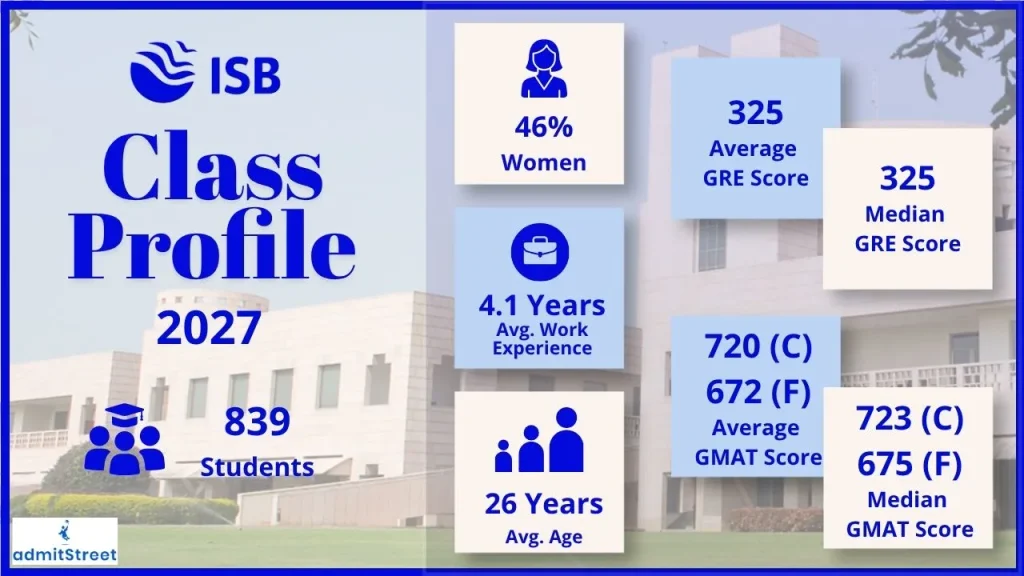
Source : ISB Class profile
| Metric | Class of 2027 |
|---|---|
| Total enrolled | 839 students |
| Average age | 26 years |
| Gender split | Male 54% (450) · Female 46% (389) |
| Average work experience | 4.10 years |
| Work experience range | 2-18 years |
| Work-ex distribution | 2-4 yrs: 485 · 4-6 yrs: 273 · 6-8 yrs: 57 · 8+ yrs: 24 |
| GMAT Classic (avg / median / range) | 720 / 723 / 640–780 |
| GMAT Focus (avg / median / range) | 672 / 675 / 575–795 |
| GRE (avg / median / range) | 325 / 325 / 309-337 |
ISB PGP Curriculum
The Post Graduate Programme at ISB starts with the basics: analytical tools and core disciplines, then opens up into paths students choose based on where they want to end up. Courses across the board push students to think critically, understand global business issues, act ethically, communicate well, and work in teams. It’s the classic “learn how to learn” approach, backed by current research and hands-on projects.
Core Curriculum
This is the cross functional foundation: business basics, leadership, and experiential work. The core courses are:
- Mastering Verbal Communication (Orientation Week)
- Financial Accounting in Decision Making (Term 1)
- Leading Self and Teams (Term 1)
- Managerial Economics (Term 1)
- Statistical Methods for Business Decision Making (Term 1)
- Written Analysis and Communication (Term 1)
- Foundations of Finance: Opportunity Cost, Risk and Valuation (Term 2)
- Strategy (Term 2)
- Marketing Management (Term 3)
- Operations Management (Term 3)
- Sustainability and Ethics (Term 4)
Flexi Core Curriculum
Here students get some choice. They pick at least four courses out of ten, all focused on decision making and the business environment, matched to their background and career goals.
- Business, Society and Non-Market Strategies (Term 2)
- Frontier Technologies (Term 2)
- Navigating Macroeconomic Uncertainty (Term 2)
- Managerial Accounting in Decision Making (Term 3)
- The Art and Science of Managerial Decision Making (Term 3)
- Business Analytics – (Term 3)
- Analytics for Marketing Decision Making – (Term 3)
- Prescriptive Analytics for Business Decision Making – (Term 3)
- Business Analytics for Finance – (Term 3)
- Strategy Analytics – (Term 3)
Electives
Starting in Term 4, students pick from 18 electives across seven functional areas (Entrepreneurship, Finance, Marketing, Operations, Information and Technology Management, Strategy, Leadership) and four industries (Healthcare, Infrastructure, Manufacturing, Public Policy). This is where students go deep in one area or spread out across several.
Block Weeks
Four weeks in the calendar are set aside for intensive, single course learning: study treks, simulations, crisis management exercises, that kind of thing, run by academics and industry leaders. Each one targets a specific skill, whether that’s strategic thinking, handling a crisis, or working across cultures.
- Study Treks: On-site visits to companies, markets, or manufacturing hubs so students see business decisions play out in the real world, not just on a slide.
- Simulations: Computer-based or role-play business scenarios where student teams make live decisions and see the consequences unfold in compressed time.
- Crisis Management Exercises: Fast-moving, high-pressure scenarios that test a team’s ability to make sound calls under incomplete information and time pressure.
- Leadership Intensives: Concentrated workshops on negotiation, cross-cultural teams, or executive presence, led by faculty or visiting industry leaders.
Experiential Learning Programme (ELP)
Every student goes through this. Teams work as external consultants for real organisations, anything from startups to global corporations to non-profits, tackling actual business problems with ISB faculty guiding them. It runs in stages:
- Project Initiation: the partner organisation and the ISB team define the challenge together.
- Dual Mentorship: each team gets an ISB faculty advisor plus an industry mentor for business context.
- Structured Timeline: the project follows set milestones, including a project charter, a mid-term review, and a final presentation of recommendations.
Students come out of the ELP with sharper problem-solving skills, more resilience, and real experience working in and leading teams.
Graduation Requirements
The programme runs one year: pre-term online courses first, then seven six-week terms and four block weeks. Students need 33 credits total, split across Core Curriculum, Specialised Electives, and Experiential Learning.
Teaching Methods
ISB mixes theory and practice through:
- Experiential Learning
- Business Simulations
- Case Studies
- In-Class Interventions
- Industry Speakers and Visits
Between the case studies, the simulations, and the live projects, students aren’t just learning concepts, they’re practicing applying them.
More on ISB
Looking for deeper insights into ISB? Explore these guides:
Final Evaluation: Is the ISB PGP Right for You?
The ISB PGP is a high-intensity, high-reward investment best suited for professionals who:
- Have accumulated 4+ years of meaningful work experience and feel ready for accelerated leadership roles.
- Are seeking rapid career advancement or a significant pivot within the Indian/South Asian market.
- Thrive in a fast-paced, collaborative, and peer-driven learning environment.
- Can manage the substantial financial investment, often through savings, loans, or scholarships.
It may not be the ideal fit if:
- You are a fresher or have less than 2 years of experience.
- Your primary goal is extensive international placement outside Asia.
- You prefer a slower-paced, more theoretical academic environment.
Ultimately, the ISB PGP is more than a degree; it’s a catalyst for transformation. Success requires clarity of purpose, a robust application, and the readiness to maximize every opportunity during an incredibly demanding and rewarding year.
FAQs – ISB PGP Guide
Is work experience in a family business or start-up considered valid for the ISB?
Yes. ISB values quality and impact of experience over brand name. Clearly articulate your role, responsibilities, achievements, and learnings in such settings.
Can I apply with a low GMAT/GRE score if other areas are strong?
While possible, it is risky. The test score is a key benchmark. A score below the class average (typically ~710 GMAT) requires exceptionally strong compensatory factors in work experience, academic record, or diversity of profile.
How does ISB support career switchers?
Extensively. The Career Advancement Services (CAS) team provides dedicated coaching, industry workshops, and networking sessions. The curriculum’s elective flexibility allows you to build knowledge in your target field.
Are there options to pursue international exchanges?
Yes. ISB has student exchange partnerships with over 50 top global schools, including Kellogg, Wharton, and London Business School. These are competitive and typically available in the later terms.
What is the ISB PGP fee for the 2027-28 intake?
Total fees for the Class of 2028 are ₹40,46,520 with shared accommodation or ₹44,45,000 with studio accommodation, inclusive of tuition, admission and commitment fees, accommodation, GST, and security deposit. Add roughly ₹2,25,000 for books, laptop, and other estimated expenses.
What is the average salary after ISB PGP?
The Class of 2026 PGP batch recorded an average salary of ₹37.29 lakhs.
Is the ISB PGP equivalent to a two-year MBA?
Yes, in credential and rigor. It condenses the core curriculum of a two-year MBA into 12 months by drawing on the greater maturity and work experience of its cohort (avg. 5-6 years), rather than by simplifying content.
How many admission rounds does ISB PGP have, and does the round I apply in affect my chances?
ISB PGP runs three rounds for the Class of 2028: Round 1 (20 Sept 2026), Round 2 (6 Dec 2026), and Round 3 (17 Jan 2027). Applying in Round 1 gives more seats and financing runway, but ISB evaluates each round on its own merits rather than reserving fewer seats for later rounds.
Dreaming of ISB?
Work with our ISB-experienced mentor to craft winning essays, LORs, and interview prep.
1 thought on “The ISB PGP 2027-28: Complete Guide to the Indian School of Business Post Graduate Program”