

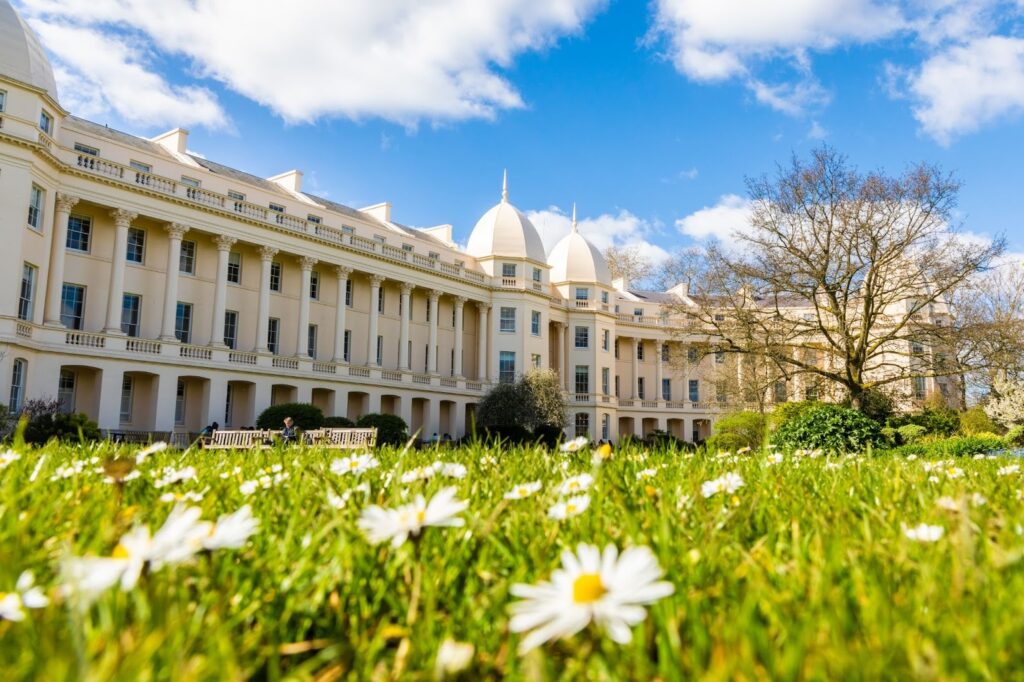
London Business School, located in the heart of one of the world’s most dynamic financial and cultural capitals, is consistently ranked among the top global business schools.
Renowned for its diverse student body, world-class faculty, and strong global network, LBS offers an immersive MBA experience that equips students to thrive in leadership roles across industries and geographies. Its flexible curriculum, emphasis on experiential learning, and strong ties to global employers make it a standout choice for aspiring business leaders.
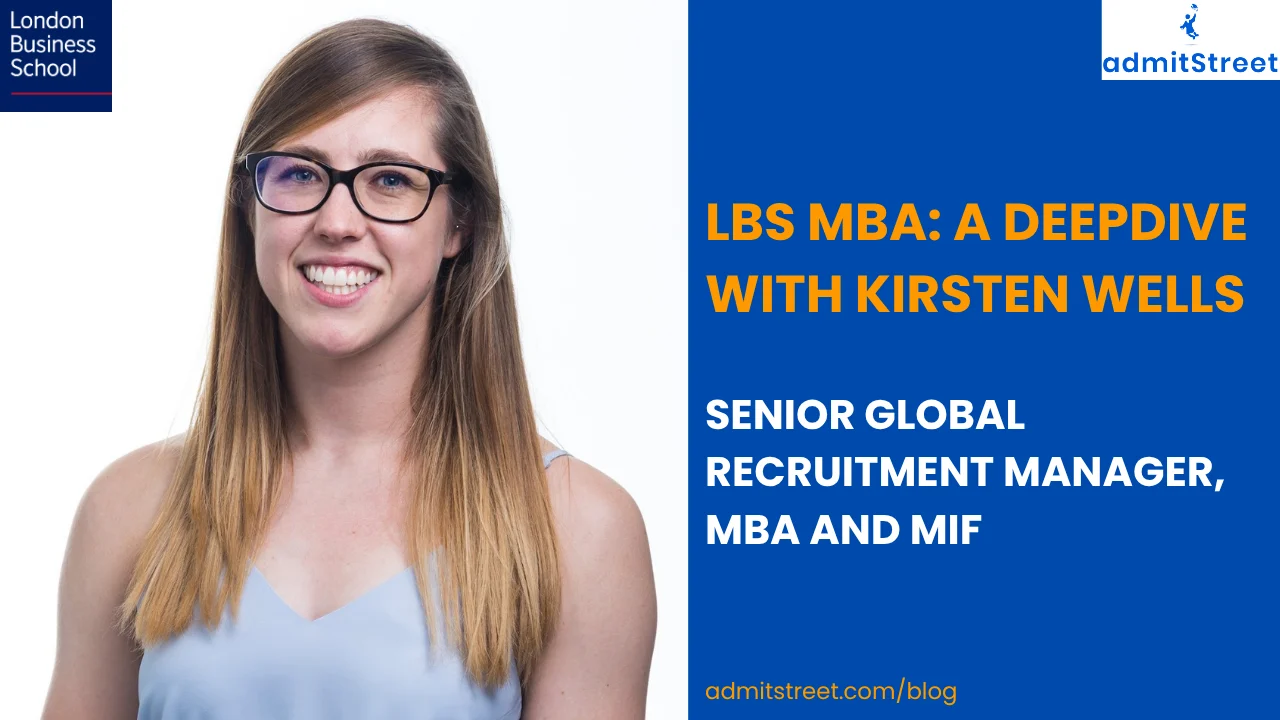
In this exclusive conversation, Arvind Kumar (Founder, admitStreet) interviews Kirsten Wells, Senior Global Recruitment Manager for the MBA and MiF programmes at London Business School.
The discussion explores the LBS MBA admissions process, community, global exposure, career opportunities, and lesser-known aspects of the program that set LBS apart.
LBS MBA Introduction
admitStreet: What are some recent updates about the LBS MBA that you’d like to share with applicants?
Kirsten: We try to do incremental updates to the MBA programme every year – we actually have a working group of senior staff, faculty and alumni that help keep the programme moving into the future and as up to date as it can be. This can help inform new electives, additional capacity for existing electives, and whether less popular electives can be reworked.
This year, some of our new electives include Economics of AI, Executing Digital Transformation and Global Economic Policy and Performance.
More broadly at LBS, we’ve also launched our new Data Science and AI initiative, which will become a central place for research at the interaction of AI, strategy and policy.
admitStreet: With the ongoing geopolitical scenario, are you seeing more interest from international MBA applicants towards the UK and thereby the LBS MBA?
Kirsten: We’ve always been a very international business school anyway – most of our MBA classes have registered at over 90% international. We know that London continues to attract the best and brightest minds from all over the world, for highly skilled work and outstanding education.
At LBS, we remain committed to recruiting as diverse classes as possible and as a result, we can often weather storms in geopolitical uncertainty.
LBS MBA Application Process
admitStreet: Could you talk about the behind-the-scenes of an application journey, right from application submission to the admission decision? What steps are involved, who reviews applications, and so on?
Kirsten: When applicants submit an MBA application to LBS, their application will be read by at least a couple of members of the Admissions Committee – we’re not AI robots just yet, still very much human beings reading applications!
If a candidate is selected to be interviewed, we have members of our MBA alumni community interview our candidates. After all, our alumni have got through the programme and out on the other side, so who better to help recruit potential new members of their own future alumni community?
At the interview stage we require the submission of a video assessment – nothing too daunting here, just another chance to get to know our candidates a bit better.
When the interview and video submissions are completed, we re-review the full application again and make final decisions. Applications are assessed by senior members of the Admissions Committee.
Timelines from submission to final admission decision do vary based on the round candidates apply in. Round 1 and 2 are typically around 12 weeks, whereas Round 3 can be a bit quicker, more like 8-9 weeks.
admitStreet: What qualities or attributes does LBS look for in a candidate? What sets a great applicant apart?
Kirsten: As mentioned previously, we do everything we can to create as diverse classes as possible, so there really is no cookie cutter or ‘required’ candidate that we look for. Within our current class, we have consultants, bankers, doctors, former military, entrepreneurs, engineers, lawyers, those with tech backgrounds and even those from the arts and former professional athletes.
Don’t self-select yourself out of considering LBS – we admit candidates with all sorts of professional backgrounds.
I would say that in our classes, there’s three distinct themes that run through all our candidates.
- The first is academic capacity. We’ve got a rigorous MBA programme, and we want to make sure that when candidates join us, they’re able to cope with that. We’ll look for academic aptitude in things like previous academic degrees, but also get insights into this from their GMAT or GRE scores.
- The second is leadership potential. Management experience is not mandatory for our MBA programme (but great if you do already have that!) What we mean here, is the potential to be a leader in the future. So if you haven’t had formal management experience yet, ways you can show this in your application is by letting us know any projects or clients you’ve lead with at work, whether you’re part of any professional or extra-curricular networks and even things like volunteering and telling us if you’re part of any sports teams is really great insight!
- The final theme is a global mindset. We’re looking for candidates who want to be in an international environment and grow within it. There is no requirement to have already lived and worked outside of your home country. Global mindset is more about being open, curious and wanting to learn as much from your future classmates as you can!
Beyond these themes, I would say the best advice for making an application stand out, is being authentic and genuine to yourself.
It’s also a great idea to show us you want LBS too – you’ll spend a lot of time researching programmes, so make sure to include that.
admitStreet: How do you view weaker sections of a profile, particularly a lower than average GMAT/GRE score or low GPA? How can candidates offset that?
Kirsten: We review applications holistically, so lower GPAs/GMAT/GRE don’t automatically rule a candidate out of consideration (likewise, high scores don’t guarantee admission).
We’ll look at a candidate’s profile as a whole, including work experience, career goals, academic background and performance and what their referee says about them.
I encourage people to think of it like a jigsaw puzzle – we won’t have a full picture until all the pieces are slotted together!
So, for example, if you’ve got a slightly lower quant section on your GMAT/GRE but you work in a quant heavy role, the Admissions Committee might be happy to assess you through that employment-based evidence.
However, the advice is you should try and submit a good score if you can, re-taking the test if you think you can improve your score.
admitStreet: What are your tips on how to approach the second essay question ‘what makes you unique’? Any do’s and dont’s?
Kirsten: I’m always a bit reluctant to give advice on this one if I’m honest – it should be answered with what feels genuine to the candidate to write about. We want to get to know them as an individual!
It’s only our second year reviewing applications with this question in, but I’ve seen some people write about upbringings, about unique experiences, about what makes them unique professionally etc.
It truly is open for interpretation – there’s no rules, just write from the heart!
admitStreet: Can you throw some light on the interview process at LBS? Who conducts interviews, what aspects are being assessed, and how can candidates excel?
Kirsten: : I touched on this briefly above, but we have MBA alumni conduct our interviews for us. Typically speaking, candidates selected for interview will be matched with an alumnus based in the city/region that they live. This way, if they want to meet in person, they can! We don’t mind if interviews are conducted virtually, but think it’s great to give opportunities for either option.
Alumni interviewers will get to see a candidate’s full application, and will explore career experience, why LBS, and future aspirations. Interviews typically are a couple of hours – and quite often we hear they’re very conversational and very much a two-way dialogue.
Again, best advice for candidates, be yourself! Do revisit your application, remind yourself of your career aspirations and your motivation for wanting to be part of LBS!
LBS MBA Curriculum
admitStreet: What are some of the unique learning methodologies and curriculum/courses adopted in the LBS MBA program?
Kirsten: There are a mix of learning methodologies used at LBS. There will be some classes that are more case-based, some that might be more workshop based, and others that are a lot more experiential.
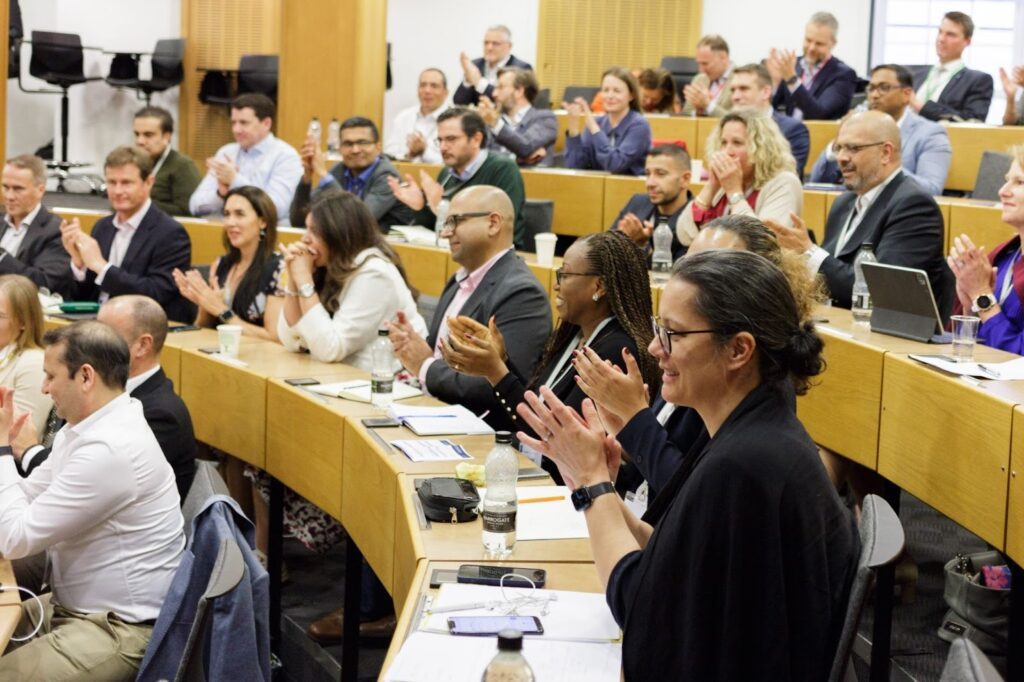
It’s really up to our world-leading faculty to choose the most suitable delivery method for their material, but one thing to note – our classrooms are collaborative places to be. There will be discussion, and students are expected to do the recommended reading ahead of time to be able to join in with discussions!
Classroom discussion at LBS is very special. We have students from all around the world, with incredibly diverse employment backgrounds, so everyone will learn from the very different viewpoints within the room.
admitStreet: Could you elaborate on the experiential learning opportunities, especially on how and why students should opt for LondonCap and the global experiences?
Kirsten: LondonCAP and the Global Experiences are often the highlight of the MBA programme.
LondonCAP sits within our Tailored Core range of MBA classes – students need to opt into doing LondonCAP (usually around a quarter of the class opt in). It is a ten-week consulting project, with a firm that has some form of base in London. All the projects are practical – they often tackle a problem of strategic importance to the client, so it’s a great way to get very hands on consulting experience!
Students are put into teams of about five to six, partnered with their client and they also get access to a faculty mentor during the ten weeks as well.
Firms we’ve worked with in the past include Mastercard, British Red Cross, Nike, McLaren, European Space Agency amongst many others.
Our Global Experiences are another highlight of the programme and all MBA students get access to one in their second year. Each Global Experience is a week long, and a chance for students to really immerse themselves in business culture – perhaps in a country they’ve never even be to before!
We have sixteen destinations to choose from at the moment and each destination will have its own theme attached to it. For example, our Stockholm GE is all about sustainability, our Johannesburg GE is all about micro-entrepreneurship and our Paris GE is about the retail luxury sector. The content of a GE will vary depending on its theme – but generally there might be company visits, some client work, faculty sessions, group project work, and a chance to engage with local alumni!
admitStreet: Can you speak about the student clubs that are the essence of the community at LBS?
Kirsten: I often call the student clubs the beating heartbeat of LBS – they are very much at the centre of our community and truly are student led!
We have about 80 clubs on campus now, anything from our sports and social clubs to professional clubs and to regional clubs. They organise in excess of 1000 events annually, including some of the biggest student-led conferences in Europe, such as our EUROUT conference, run by our Out in Business Club to our EQUALL Conference, run by our Women in Business club.
The hardest part will be time management when it comes to clubs – there’s so much to get involved in, that it’s very easy to try and say yes to everything!
LBS 1-Year MBA
admitStreet: Tell us about the 1-Year MBA Program. What is the application process and eligibility criteria?
Kirsten: The One-year MBA is our newest addition to our programme portfolio. It does have a different pre-requisite requirement to our MBA programme (the 15-21 month duration).
One-year MBA candidates will need to have a masters in management or equivalent from an AACSB, EQUIS or UK Russell Group institution. Generally speaking, the masters degree will need to have covered most of the main disciplines of business including accounting, data analytics, economics, finance, marketing, organisational behaviour, and strategy.
The application consideration is very similar i.e. applications will be read by several members of the Admissions Committee, there will still be an interview and videos to submit, but the deadlines and some elements of the application journey are a little different.
There are four rounds of admissions deadlines for the One-year MBA, and interviews are currently conducted by members of our Recruitment and Admissions team.
admitStreet: What are the key differences between the 1-Year MBA and the 2-Year MBA? What type of candidates would benefit most from each of these Programs?
Kirsten: Of course, the first big difference is the pre-requisite requirement.
If you have a masters in management, you may have the choice between programmes. Students on the One-year programme will start with the exciting contemporary core courses themed around three main themes: Navigating the New Business Environment, Rethinking Corporate Purpose and Individual Agency and Entrepreneurship. They’ll then move on to Electives and take a Global Experience, just like the MBA students.
Students on the 15-21 month route will have the opportunity for internships and exchange if they wish. We believe that we will have more career changers on the two-year programme and more career advancers on the One-year, but both groups will be present in both classes.
admitStreet: How has the first 1-year MBA cohort done? Can you share some statistics?
Kirsten: Our inaugural class started in August 2025 and seem to be having a great time on this intensive but rewarding learning journey.
Our first class has 33 students from 24 nationalities, and represent a full cross section of industries: consulting, finance, technology and some entrepreneurs and students from family businesses etc.
LBS MBA Careers
admitStreet: The latest LBS MBA employment report indicates that 42% of the Class of 2024 entered consulting, 26% entered the finance industry, and 21% chose tech careers. Could you elaborate on the recruitment process? How does LBS ensure such diversity in career outcomes apart from the mainstream industries, and what are the support mechanisms in place to help candidates achieve their desired career outcomes?
Kirsten: We have a dedicated Careers Centre on campus – there’s over 40 people working for the Careers Centre.
They’re broadly split into two teams – Career Management (our career coaches offering tailored support to our students on individual and sometimes group basis) and our Employer Engagement team (they liaise with recruiters, building relationships with them and also providing sector insights to our students).
We achieve diversity in recruiting due to the work of both teams – we work with a lot of very varied employers every year, constantly nurturing existing and creating new relationships, plus we provide expertise to our students via our career coaching.
At LBS, there will be a lot of information presentations and networking evenings throughout the programme – we host in excess of 200+ career events every year. Anything from our Scale Up and Start Ups night, to our Boutique Consulting night and individual company presentations in between!
It’s important for me to say – Careers Centre is not a match making service. The team are there to help provide guidance, skills development, and they post global job opportunities to our job board, but they do not place our students in roles.
It’s up to the students to navigate their own career journey – be it for internship or full-time recruiting. What you get out of it really depends on what you put in.
admitStreet: For international candidates, which sectors and geographies do graduates typically secure roles?
Kirsten: There’s a lot of great information in our employment report if you’re yet to download that.
Typically, we are seeing a lot of students from Asia choose to stay in the UK – anywhere between a third and a half of students from the region stay following graduation. A similar proportion do end up returning to Asia immediately after graduation.
admitStreet: With the global geopolitical situation in unrest, how does LBS tackle it and ensure high employability outcomes for the candidates?
Kirsten: I think the Careers Centre team is perfectly set up for guiding our students in times of uncertainty.
Our Careers Centre team quite often have worked in industry before becoming career coaches, so bring a lot of expertise with them for conversations with students. Our global recruitment options also do help to alleviate any disruption caused by geopolitical instability – for example, there’s the possibility to tap into markets internationally that might be experiencing growth.
For our students, Careers Centre try to encourage skills like resilience and being open-minded when it comes to employment. So, for our students, if there are certain things that are non-negotiable (e.g. location), then perhaps there needs to be flexibility on other things (e.g. sector).
Conclusion
admitStreet: What would be your top 3 tips for candidates applying to the LBS MBA program?
Kirsten: Know your why. Why now for an MBA? Why the LBS MBA specifically? Why an MBA at all? I think this will really guide everything else you’re working on in the application.
Really do your research, including going to events, but also taking with current students. This applies for any school you’re applying to – find out about the culture, values of the schools you’re thinking about. Do they align with you? Do you see yourself being a fit in the community?
Be authentic in the application – we want to get to know you as an individual in the application, so show us who you are! Write the application in a way that’s genuine to you.
admitStreet: admitStreet: Besides the online group webinars, how can applicants connect with the AdCom at a personal level, if they have any questions or clarifications?
Kirsten: Our email address is mba@london.edu. You can reach out to us with any questions there!
We’re also on the road quite a lot so we might be coming to a city near you soon!
An extension of our Recruitment and Admissions team is also our MBA Student Ambassadors. Our Ambassadors have volunteered for their roles and are on hand to answer any questions from our prospective candidates.
We recruit them from a variety of backgrounds, sectors and nationalities, so hopefully you’ll find someone you identify with!
admitStreet: Can we end with a fun fact on the LBS MBA? Something you wish applicants knew?
Kirsten: Aside from the academics, career outcomes, I think I’ll end on what surprises candidates most about LBS – and it’s an answer that might think ‘oh well, that’s interesting, because it’s what LBS is often known for’. Diversity.
We talk about it a lot at events and with prospective candidates, but it is still the thing I hear most from students when they start ‘I knew it was when I applied, but I can’t believe just how truly diverse the class is’.
I think it’s what makes LBS so special – the global community, the sheer amount of diversity we have, but also its inclusiveness, openness and how welcoming it is. It’s truly a special place to be.
admitStreet: Many thanks for your time and insights, Kirsten. We appreciate it and hope this will give applicants a comprehensive overview of the LBS MBA.
Thinking about applying this year?
Deadlines sneak up fast. Let us help you shortlist the right-fit MBA programs for your goals and profile.